

Success in ecommerce isn’t just about traffic or magic marketing hacks — it’s about strategy, persistence, and smart execution. Behind every thriving online store are real business owners who faced challenges, tested ideas, learned from failures, and found scalable growth paths. These success stories aren’t just feel-good tales — they’re case studies packed with lessons you can apply to your own ecommerce business.
Below, we break down compelling examples from diverse ecommerce brands — from lifestyle and niche products to community-driven ventures — and highlight the key lessons that helped them grow.
From Community to Commerce: Turning Passion Into Daily Sales
One standout example in ecommerce shows how a founder built a thriving business from community first. The entrepreneur began with high-quality educational content built around a strong niche community. Over time, they developed products that deeply resonated with that audience, turning followers into loyal customers and eventually generating consistent daily sales.
What you can learn:
- Build an audience before or while you build products. Communities drive trust, word-of-mouth, and repeat purchases.
- Content that solves real problems inspires trust and creates demand for related products.
- If your community grows organically, conversion rates tend to be higher because the audience already values your perspective.
Optimizing Engagement and Conversion With Smart Tactics
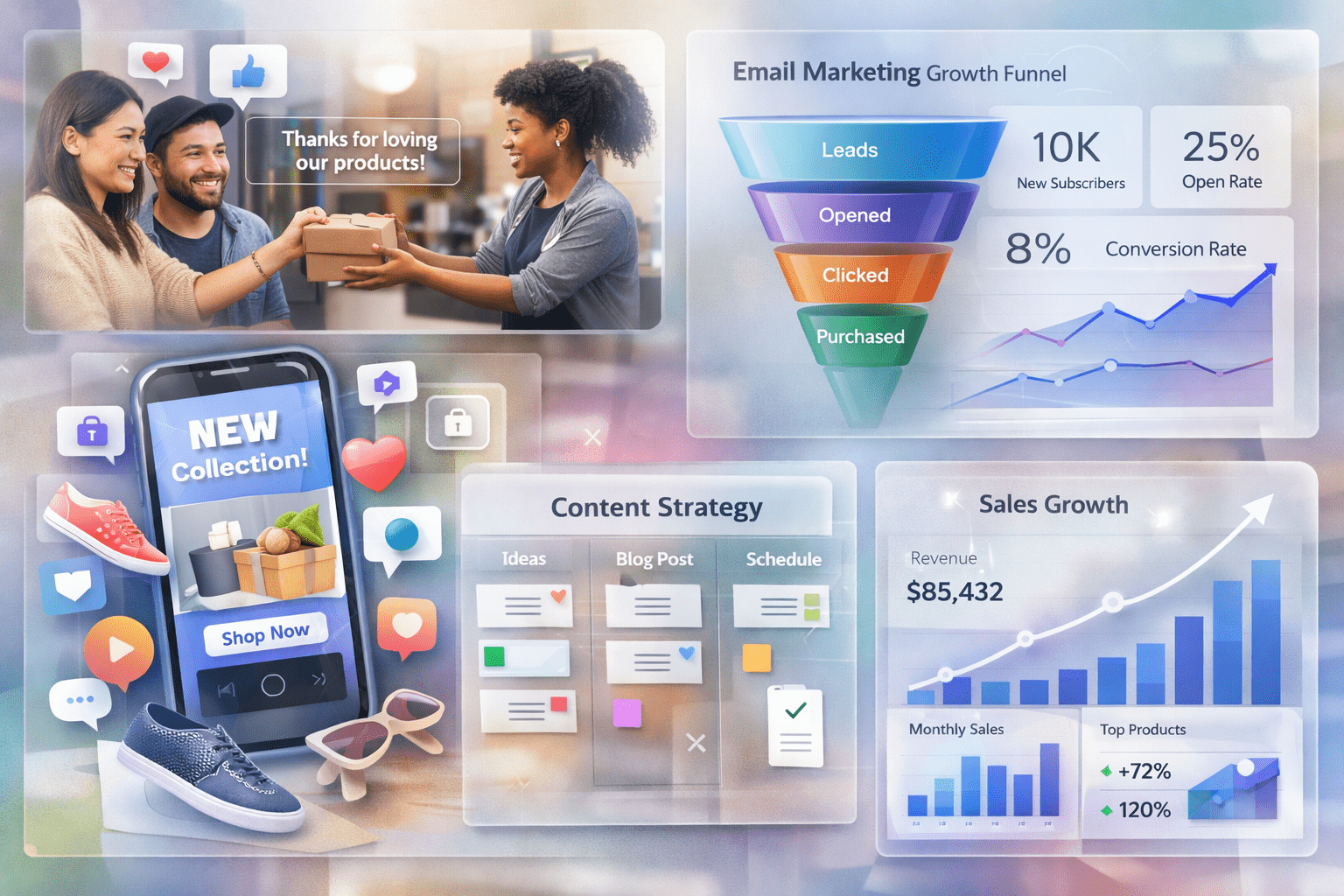
Some brands have used targeted engagement strategies to dramatically grow their email lists and increase sales. For example, one retailer addressed customer hesitation using persuasive on-site messaging and interactive opt-in forms. By offering meaningful incentives — like discounts or value-driven content — they captured more leads and converted window shoppers into repeat buyers.
What you can learn:
- Capture emails early and often — email remains one of the most powerful channels for revenue.
- Use thoughtful incentives that align with customer expectations instead of generic popups.
- Interactive elements (such as yes/no prompts or instant savings popups) reduce friction and increase sign-ups.
Converting Social Followers Into Revenue
Many ecommerce brands discover that a large social presence doesn’t automatically translate into sales until they build proper conversion paths. One brand saw huge social traction but low sales until they started capturing website traffic with email incentives. Once followers were brought into a nurturing environment, email campaigns drove repeat purchases and significantly boosted revenue.
What you can learn:
- Social followers are attention assets; they become revenue when you get them into owned channels like email or SMS.
- Use exclusive social-to-email offers to turn passive followers into engaged prospects.
- Email marketing is a bridge from awareness to conversion — leverage it early.
Content as a Growth Engine
In another success story, a retailer leveraged content marketing to dramatically increase visibility and customer acquisition. By publishing engaging, value-driven blog posts and guides around their niche, the business attracted an audience that was actively seeking solutions. This not only grew organic traffic but also improved search relevance and customer trust.
What you can learn:
- Helpful content builds authority and improves organic discovery — making it easier for customers to find you.
- Content doesn’t have to be long or complicated; it just needs to address real questions your audience is asking.
- Repurpose content across channels (email newsletters, social posts, product FAQs) to maximize reach.
Creative Marketing That Breaks the Mold
Some brands have broken through crowded markets by differentiating their identity and leaning into bold creative marketing. For example, a direct-to-consumer brand disrupted its category with a creative launch video and straightforward subscription model that resonated with its audience. This approach drove rapid brand awareness, community engagement, and ultimately, high lifetime value.
What you can learn:
- Differentiation isn’t optional — it’s essential. If your brand feels interchangeable with competitors, buyers have no compelling reason to choose you.
- Creative storytelling and personality can dramatically increase memorability and shareability.
- A well-executed launch or campaign can generate buzz that pays off long after the initial push.
Turning Sustainability and Values Into Brand Strength
Another compelling pattern among successful ecommerce ventures is purpose-driven branding. Brands that deeply integrate values like sustainability, ethical sourcing, or unique craftsmanship into their offerings tend to cultivate strong loyalty. Customers become advocates and repeat buyers because the brand reflects their own values — particularly in lifestyle categories like fashion, beauty, and home goods.
What you can learn:
- Your brand story should align with customer values, not just trend jargon.
- Clearly communicate how products are made, why they matter, and how purchasing contributes to something bigger.
- Purpose-driven brands often benefit from higher customer retention and word-of-mouth referrals.
Lessons From Massive Market Expansion
Significant success stories also come from brands that systematically expanded beyond their initial niche — sometimes into new regions, categories, or channels. These brands invested in analytics, customer research, and infrastructure to scale without sacrificing experience quality. They didn’t just chase vanity metrics; they measured performance and optimized over time.
What you can learn:
- Use data to identify your best-performing products, audiences, and campaigns — then scale what works.
- Expansion should be strategic and incremental, not random.
- Logistics, fulfillment, and CX infrastructure matter as much as marketing.
Common Threads in Ecommerce Success
Across all of these examples, a few consistent themes emerge:
1. Know your audience deeply.
Successful ecommerce brands understand customer motivations, pain points, and preferences because they base decisions on real behavior and feedback.
2. Convert attention into outcomes.
Large followings and traffic are valuable only if you have a systematic path to convert that attention into purchases — and repeat purchases.
3. Build systems, not one-off wins.
Whether email campaigns, content strategies, or product launch funnels, repeatable systems lead to sustainable growth.
4. Differentiate with creativity and purpose.
Brands that craft a distinct identity — and communicate it clearly — win in crowded markets.
5. Iterate based on data.
All successful examples test, measure, and adjust — they don’t set campaigns in motion and hope for results.
Turning Stories Into Strategy
Success leaves clues. These ecommerce examples demonstrate that strategic focus, audience understanding, creative execution, and data-informed decisions are what separate thriving brands from the rest. You don’t need a massive budget to succeed; you need a thoughtful approach, consistent execution, and a willingness to learn from both wins and setbacks.
If you integrate these lessons into your own strategy — refining your audience approach, building structured conversion paths, and crafting a compelling brand narrative — you’ll be well on your way to writing your own ecommerce success story.
