
5-page website
Starting at$199/month
24 monthly payments
$4,776 total at the starting price
Business website design & development
Starting a business or ready for a better website? Get a WordPress site with clear service pages, a polished mobile experience, and a straightforward way for customers to inquire.
Have your content ready? Ask about an accelerated build. We confirm the schedule once the scope, content, and access are approved.

Website packages
All packages include website hosting, SSL, a domain name, and theme and plugin licenses for two years.
Starting at$199/month
24 monthly payments
$4,776 total at the starting price
Starting at$299/month
24 monthly payments
$7,176 total at the starting price
Starting at$399/month
24 monthly payments
$9,576 total at the starting price
Custom work is quoted separately. We confirm your project scope before work begins.
Real XMLA projects

A local service business with a clear customer inquiry path.
View project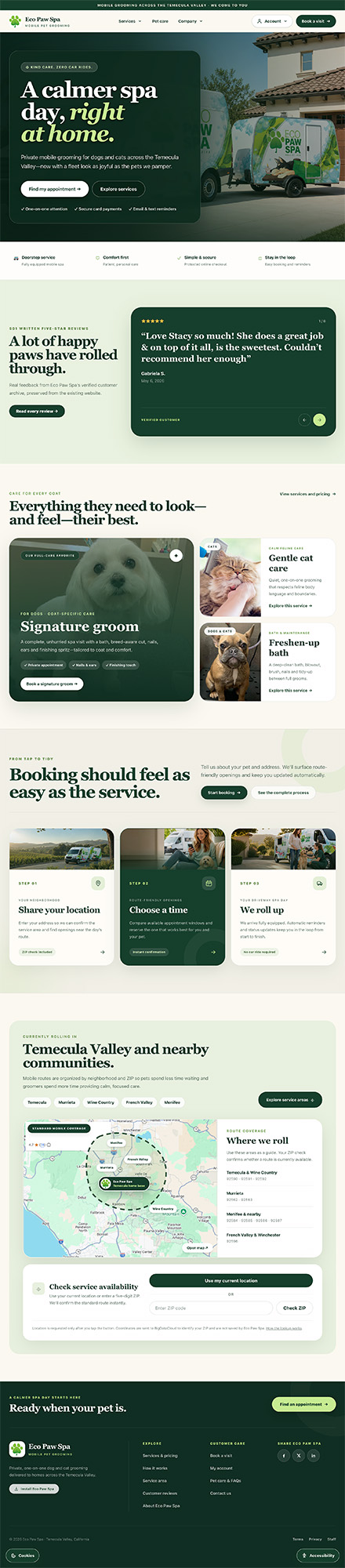
A mobile service business with a polished online presence.
View project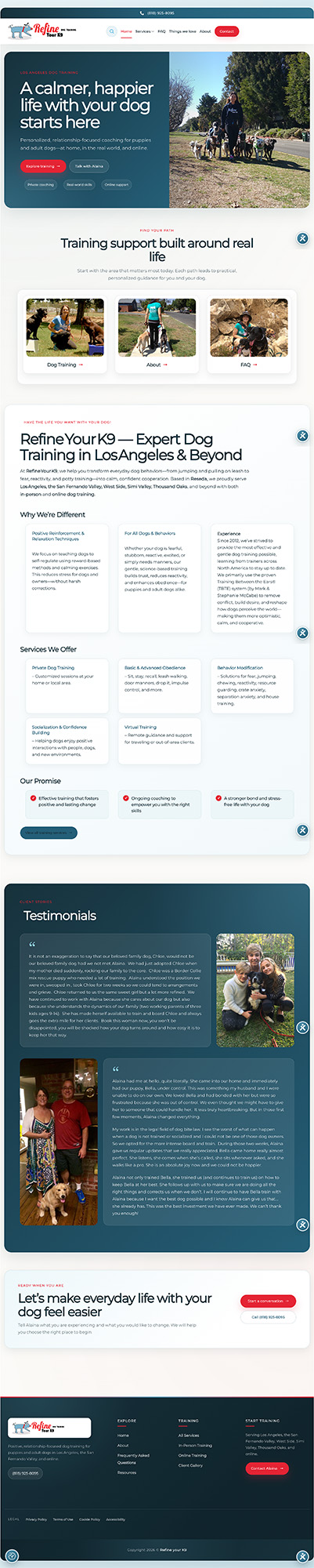
A service-led website that explains the business and its offering.
View projectExamples of XMLA website work. Your project is scoped to your own goals and requirements.
Have a full brief ready? You can also use our detailed development quote form below.
Most website projects split strategy, design, development, hosting, and support across disconnected vendors. XMLA keeps the build and the operating environment connected from the first decision.

Page architecture, conversion goals, service positioning, audience flow, and launch priorities.

Premium visual direction, responsive layouts, branded components, and clear content hierarchy.

WordPress development, landing pages, WooCommerce, forms, integrations, and clean launch prep.

Hosting-aware handoff, updates, support routes, performance checks, and ongoing improvement.
Both paths are built with the same design discipline. The difference is how much custom architecture, workflow logic, and integration depth your business needs.
A clean, conversion-ready business website for companies that need a polished online presence without custom platform complexity.
A deeper development engagement for companies that need custom WordPress functionality, integrations, ecommerce, workflows, or platform behavior.
Choose the platform that fits your business. Alongside our WordPress development, XMLA offers focused design, development, and ongoing management for Shopify and Squarespace.
Launch or improve your online store with branded theme design, organized products and collections, app integrations, migration planning, and ongoing store support.
Build a polished business website or portfolio, refine your mobile layouts, connect the tools you need, and keep your content and customer journeys up to date.
Shopify and Squarespace provide their platform hosting. Platform subscriptions, themes, apps, and other third-party fees are separate from XMLA development and management unless included in your quote.
Every build is scoped around the job the website needs to perform: earn trust, capture leads, sell, route requests, explain services, and keep the business easier to operate.
Service-company websites, professional practices, local brands, corporate pages, and trust-building lead generation sites.
Campaign pages, consultation funnels, product launches, paid media destinations, and conversion-focused page builds.
Catalogs, stores, payment flows, product pages, shipping logic, and ecommerce support built on WordPress.
Forms, CRM handoff, booking tools, analytics, email routing, third-party embeds, and operational connections.
Modernized layouts, better structure, refreshed messaging, performance cleanup, and clearer calls to action.
DNS, SSL, hosting, backups, content migration, QA, launch timing, and post-launch support planning.
XMLA plans the site around real launch conditions: content readiness, hosting, DNS, SSL, forms, analytics, device testing, backups, access, support, and the first round of improvements.
The process is structured so design decisions, development work, and launch support are visible before the site goes live.
Clarify the business goal, audience, content inventory, required features, and launch constraints.
Map pages, calls to action, visual direction, technical structure, hosting needs, and measurement.
Create the interface system, hero moments, sections, cards, forms, responsive behavior, and content hierarchy.
Build the WordPress experience, connect forms and integrations, optimize assets, and prepare the site for launch.
Test across devices, finalize SEO basics, connect hosting, handle go-live details, and stabilize the release.
Use managed services, hosting support, analytics, updates, and new feature work to keep the website moving.
Move directly into design, upgrade, hosting, care, portfolio, or support when you need more context around the build.
Visual design, page composition, brand alignment, and premium first impressions.
UpgradeImprove an existing site when a full rebuild is not the right first move.
HostFast WordPress hosting with SSL, backups, monitoring, and real website support.
CareUpdates, edits, support requests, plugin care, security review, and ongoing website operations.
WorkExplore recent website, media, branding, and digital platform work from XMLA.
HelpGet help, request fixes, open support needs, and keep your website moving after launch.
Website fit system
Answer a few practical questions and XMLA will recommend the hosting plan, website build type, and next quote step that best fits the business.
Use this form to share project goals, current website context, timeline, budget range, required features, and example references so XMLA can scope the right build path.
Start with a basic business website or scope a custom WordPress system. XMLA can design it, build it, host it, support it, and keep improving it after launch.