

The ecommerce landscape isn’t slowing down — it’s evolving faster than most brands planned for. Where traditional online selling once meant a simple web store and a few social ads, the next chapter of ecommerce demands innovation, agility, and a deep understanding of how technology and customer behavior are reshaping online commerce.
From artificial intelligence taking the driver’s seat to new forms of social shopping and ultra-personalized experiences, 2026 and beyond will be defined by trends that separate future-ready brands from yesterday’s players.
AI Becomes the Heart of Ecommerce
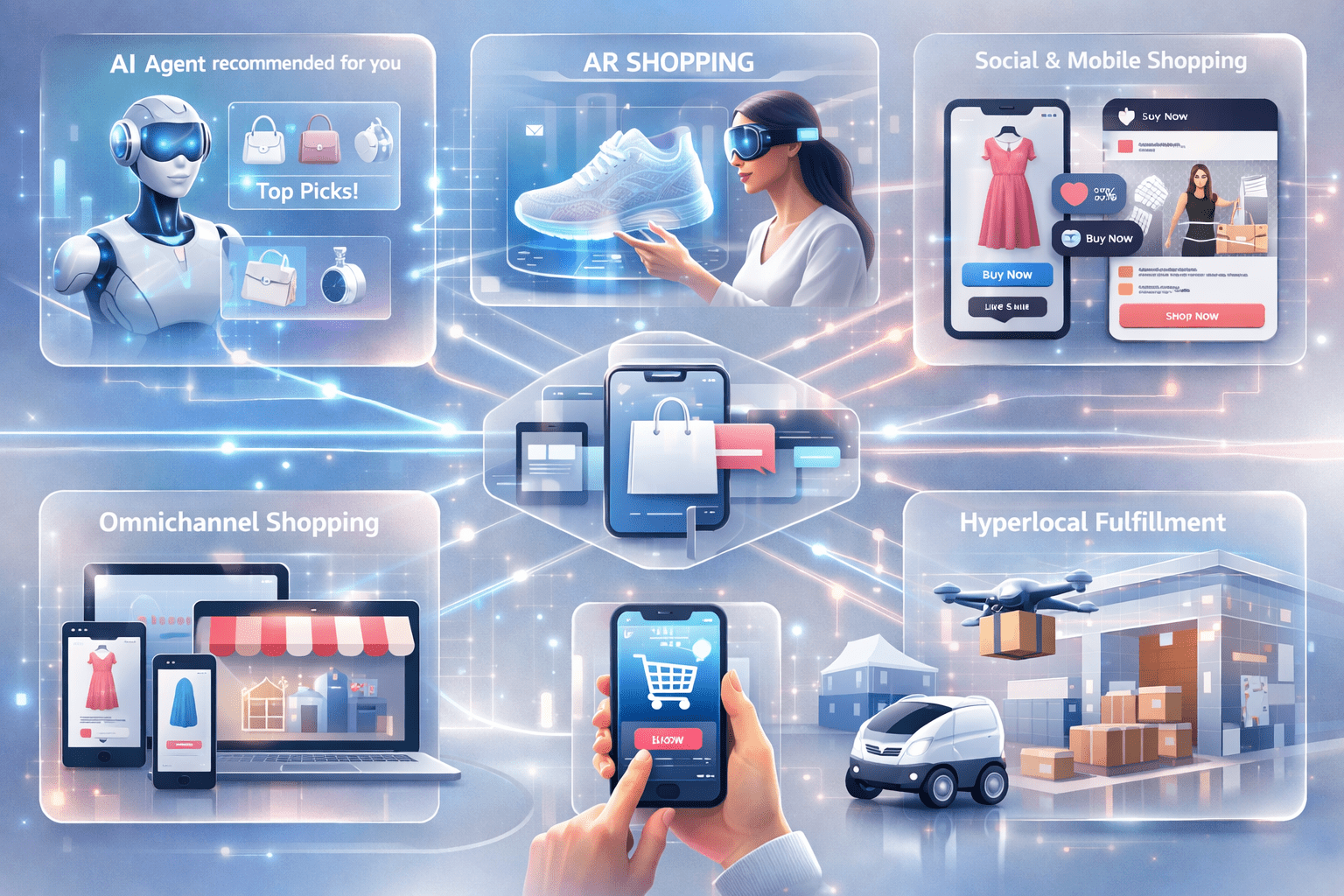
Artificial intelligence isn’t just a tool anymore — it’s the engine driving customer experiences and commerce decisions. Ecommerce platforms are already leveraging AI for smarter search, individualized product recommendations, automated inventory management, and personalized marketing. In 2026, AI will go even further by powering autonomous “agentic” commerce — smart assistants that help customers browse, compare, and even buy products on behalf of the shopper, reducing friction and increasing conversions.
AI isn’t just about automation; it’s about prediction and precision. Smarter AI systems can anticipate customer needs based on behavior, adjust pricing dynamically, and tailor experiences in real time. The brands that integrate AI deeply into both front-end and back-end operations will unlock a significant competitive edge.
Hyper-Personalization Is Table Stakes
Customers now expect experiences that feel exactly like they were made for them. Generic shopping journeys are on the decline, replaced by tailored interactions driven by data insights. This means product recommendations, search results, email and message campaigns, and even pricing offers become unique to each individual. Hyper-personalization goes beyond “Hello, [Name]” — it involves adapting the entire shopping experience based on location, past behavior, preferences, time of day, and predicted needs.
In 2026, personalization moves from being an advantage to a requirement. Brands that fail to adapt will see lower engagement, higher cart abandonment, and a loss of loyalty as customers gravitate toward competitors who get them.
Social Commerce Evolves Into Interactive Shopping Hubs
Social media is no longer just a traffic driver — it’s becoming a full-blown shopping platform. While shoppable posts and product tags were just the beginning, the 2026 version of social commerce includes:
- Live selling events that blend entertainment with instant purchase opportunities
- Creator-driven stores directly within social platforms
- Interactive product discovery through short-form video feeds
Rather than redirecting shoppers away, platforms are keeping commerce inside the social app, creating frictionless discovery and checkout. Community and creator influence become direct drivers of sales, not just awareness.
Mobile and App-First Experiences Dominate
Mobile commerce has long been a major portion of online shopping, but in 2026 it evolves into app-first ecosystems where brands create dedicated mobile experiences that are faster, more engaging, and more deeply integrated into user behavior than traditional mobile web. Push notifications, app-only deals, and embedded social interactions make mobile apps a central touchpoint for discovery to purchase.
Customers keep their favorite brands in their pocket — literally — giving brands more direct access to engagement, repeat purchases, and loyalty programs that live entirely inside the smartphone experience.
Headless & Composable Commerce Power Flexibility
The traditional ecommerce platform — all-in-one software with limited flexibility — is giving way to a “headless” or composable architecture. This approach separates the frontend experience from backend ecommerce logic, allowing brands to innovate their storefronts independently while tying into best-of-breed services for search, checkout, fulfillment, and personalization.
Composable commerce lets teams mix and match microservices so that every part of the journey — from search to cart to delivery — is optimized independently and updated without replatforming. In a world where customer expectations change rapidly, this modular approach becomes essential for agility and innovation.
Omnichannel Experiences Become Seamless
Ecommerce isn’t limited to one channel. Customers expect a unified journey across web, mobile, in-store, social platforms, voice assistants, and emerging touchpoints like wearables or connected TVs. The brands that win are those that make commerce feel seamless across every context: a customer might discover a product on social media, save it in an app, try it via AR, purchase it on the web, and return it in a physical store — all with a unified brand experience.
Omnichannel isn’t an add-on — it’s the baseline expectation for how modern customers engage with brands, and it requires real data integration and experience orchestration behind the scenes.
Real-Time Engagement and Conversational Commerce
Search behavior itself is transforming. Conversational interfaces powered by AI — from voice assistants to chatbots — are becoming primary ways customers discover and buy products. Instead of typing keywords into a search box, shoppers may ask a digital assistant to find products based on needs and context, and receive instant, personalized responses.
This shift changes how brands design search experiences, organize product data, and present discovery paths, requiring greater emphasis on natural language understanding and conversational UX in ecommerce platforms.
Sustainability and Purpose-Driven Commerce
Customers, especially younger generations, increasingly care about sustainability, ethical sourcing, and brand responsibility. Ecommerce brands that visibly adopt sustainable practices — from eco-friendly packaging to transparent supply chains and circular economy models like resale or rental — attract loyalty and advocacy.
Sustainability isn’t a “nice to have”; it’s a differentiator that influences purchase decisions and enhances brand trust in an era where consumers increasingly connect values with spending choices.
Immersive Shopping: AR & VR Experiences
Augmented reality (AR) and virtual reality (VR) are bridging the gap between in-store experiences and online convenience. These tools let customers try before they buy in more intuitive ways — visualizing furniture in their living room, virtually testing apparel fit, or engaging with products in a simulated environment before checkout.
Immersive shopping experiences increase confidence and reduce hesitation, helping ecommerce brands lower return rates while enhancing engagement.
Hyperlocal Fulfillment and Speed Optimization
Customer expectations around delivery remain high, and brands are doubling down on fulfillment strategies that reduce shipping times while controlling costs. Hyperlocal fulfillment — using local hubs, micro-warehouses, and partnerships with delivery networks — enables same-day or next-day delivery in key urban markets.
Faster, more reliable delivery is a competitive advantage, but it requires investment in logistics, automation, and real-time tracking technologies.
The Importance of Data Integrity and Privacy
With increasing sophistication in personalization and AI, data privacy and ethical use become core strategic priorities. Rich data can drive personalization at scale, but customers demand transparency about how their information is used and protected. Brands that build trust by handling customer data responsibly will perform better in both engagement and retention.
Balancing personalization with privacy protections will be a defining challenge going forward as regulations tighten and consumers become more aware of data issues.
What This Means for Your Ecommerce Strategy
Emerging ecommerce trends for 2026 and beyond signal one thing clearly: commerce is becoming more intelligent, contextual, and customer-centric. Brands that survive and thrive will be those that:
- Embed AI deeply into discovery, personalization, and operations
- Treat mobile and app experiences as core touchpoints
- Build flexible, modular platforms that adapt quickly
- Create seamless omnichannel engagements
- Embrace sustainability as a strategic advantage
- Lean into immersive tech and next-gen interfaces
- Respect customer data and privacy
These aren’t just buzzwords — they represent real shifts in consumer behavior and technology adoption that define modern digital commerce. Preparing for them now means positioning your brand for growth, relevance, and resilience in the years ahead.
