

n a world where millions of online stores compete for attention, strong SEO isn’t optional — it’s the foundation of long-term organic growth. Search engines remain one of the most dependable channels for driving consistent, buyer-ready traffic to ecommerce stores, and in 2026 the landscape continues to evolve with changes in search behavior, AI influence, mobile expectations, and competition intensity.
Search Engine Optimization (SEO) is how you make your store discoverable, relevant, and trusted in the eyes of both search algorithms and real buyers. If your ecommerce site isn’t strategically optimized, your products may never reach customers actively searching for what you sell.
Why SEO Still Matters
Organic search remains one of the primary ways online shoppers start their buying journeys. Unlike paid advertising, organic SEO builds compound visibility over time: once you rank well, your pages continue to attract clicks without ongoing spending on ads. For small ecommerce stores especially, this can establish a sustainable pipeline of qualified traffic and sales.
Well-executed SEO helps your store:
- Rank higher in search results for buyer-intent queries
- Attract traffic that is actively looking to buy
- Reduce dependency on paid ads for visibility
- Build long-term brand authority and trust
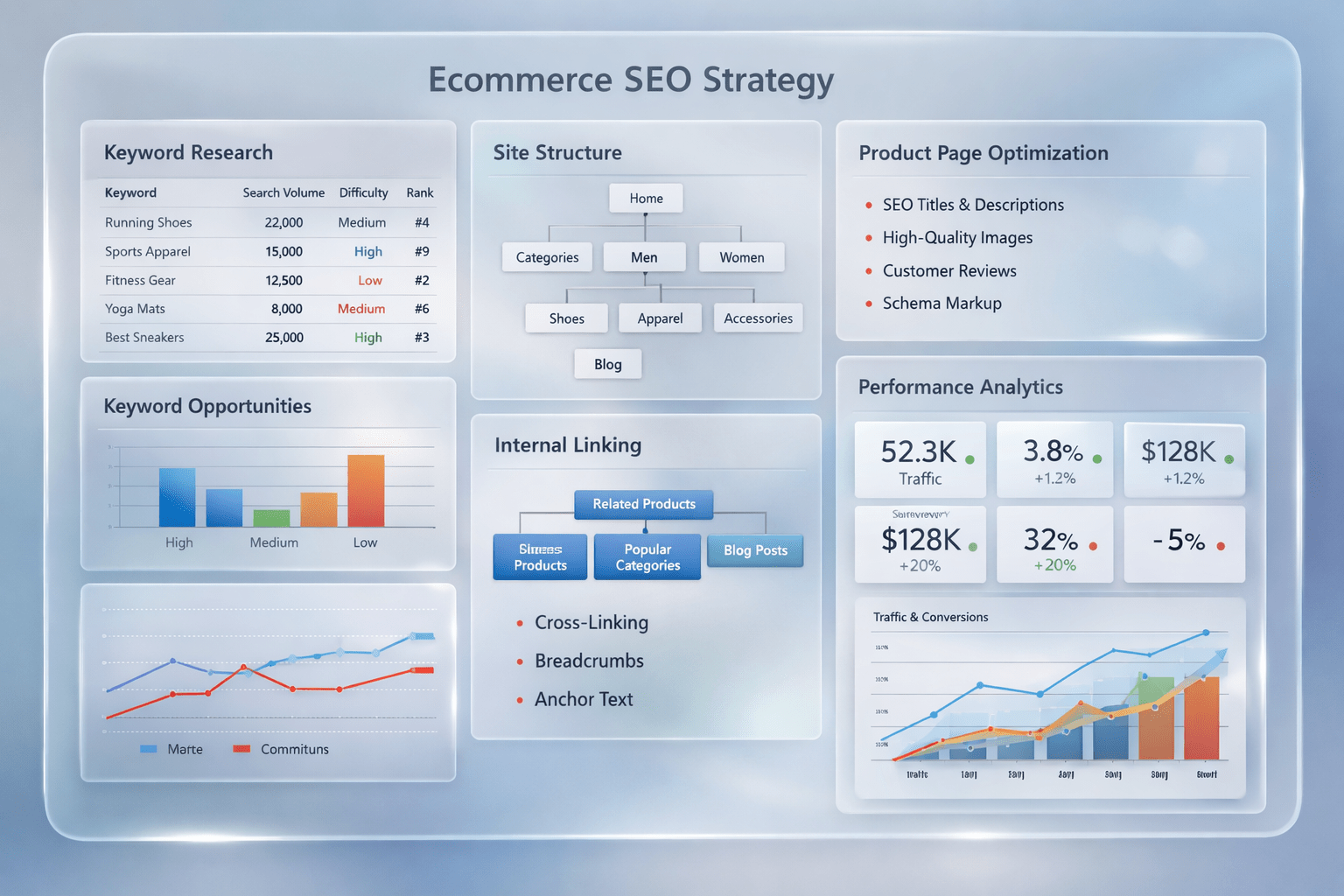
1. Keyword Research With Buyer Intent
Keyword research is the heart of ecommerce SEO. But in 2026 the focus goes beyond generic search volume — you need to understand the intent behind searches.
This means:
- Identifying terms that signal purchase intent (e.g., “buy,” “best,” “discount,” “review,” “shipping”)
- Targeting long-tail keywords that are specific to your products and audience
- Differentiating between informational and transactional queries
Choosing the right keywords ensures your content aligns with what users are actually searching for when they’re ready to buy. Prioritizing these terms increases the likelihood that searchers become customers.
2. Optimize Product and Category Pages
For ecommerce sites, product pages and category pages are the most important SEO assets. These pages are where relevance meets intent — meaning they must be both search-friendly and conversion-focused.
Optimization should include:
- Unique, descriptive titles and meta descriptions
- Clear, compelling product descriptions that include target keywords
- High-quality images with descriptive alt text
- User reviews and social proof embedded on product pages
Well-optimized pages help search engines understand what you sell and make shoppers confident and informed enough to buy when they visit. The combination of relevance and clarity is a strong signal for both visibility and conversions.
3. Improve Technical SEO and Site Performance
Technical SEO ensures that search engines can crawl and index your site effectively. In 2026, search engines continue to reward fast, accessible, and mobile-friendly sites.
Key technical areas to focus on include:
- Improving page speed and load times on desktop and mobile
- Ensuring clean, crawlable site architecture
- Using structured data (schema) to highlight product details like price, availability, and reviews
- Avoiding duplicate content and poorly configured URLs
Search engines increasingly rely on signals like mobile friendliness and speed not just for rankings but also for overall user experience, which directly impacts conversions and bounce rates.
4. Create Helpful, Intent-Aligned Content
SEO for ecommerce isn’t just about products. Content supports discovery and builds trust long before a user hits a product page.
Useful content formats include:
- How-to guides that answer common customer questions
- Buying guides comparing product types
- Tutorials or videos demonstrating product usage
- FAQs that address common purchase concerns
When you create content that aligns with real user intent — especially earlier in the funnel — you build topical authority, expand your reach, and create more opportunities for internal linking back to sellable pages.
5. Build an Intuitive Site Structure With Internal Linking
Your site’s architecture affects both search visibility and user experience. Well-structured navigation ensures that search engines understand your key pages and that users find what they’re looking for quickly.
Good practices include:
- Organizing products into logical categories and subcategories
- Linking related products, categories, and content internally
- Making sure important pages are reachable within a few clicks of the homepage
Internal linking not only improves SEO but also helps distribute ranking authority across your most important pages, driving higher visibility across more entry points.
6. Focus on On-Page and Off-Page SEO Together
On-page SEO includes everything from title tags and meta descriptions to mobile friendliness and content relevance. Off-page SEO refers to activities outside your site that influence search rankings, including earning backlinks from reputable sources.
High-quality backlinks send trust signals to search engines and increase the authority of your store. Combine on-page excellence with strategic outreach — such as partnerships, guest content, and product reviews — to broaden your ecommerce visibility.
7. Optimize for Emerging Search Behaviors
The way people search has changed. In 2026, buyers increasingly rely on more natural modes of search — such as voice and visual search — and personalized AI-assisted results.
To prepare for this:
- Write product descriptions and content that reflect conversational language
- Use structured markup to help search engines better interpret product attributes
- Optimize images for search discovery by using descriptive file names and appropriate alt text
As search becomes more nuanced and AI influences rankings, relevance and clarity in your content become even more essential.
8. Track Performance and Iterate
SEO is iterative. You can’t optimize once and forget it.
Build dashboards that monitor:
- Organic traffic trends
- Keyword rankings
- Page performance metrics (bounce rate, time on page, conversions)
- Crawl errors and technical issues
Review these regularly to spot opportunities to improve. SEO is a long-term investment, and the stores that succeed are the ones that continuously refine and adapt.
9. Align SEO With Conversion Optimization
Traffic means little if visitors don’t convert. SEO and conversion optimization are closely linked: higher rankings can mean more buyers if your pages are persuasive.
Conversion enhancements include:
- Clear and compelling calls to action
- Trust signals like reviews, guarantees, and social proof
- Streamlined checkout experiences
- Persuasive product content and visuals
By aligning SEO with conversion best practices, you ensure that the traffic you earn translates into actual revenue growth.
Conclusion
In 2026, ecommerce SEO remains a powerful, long-term strategy for small online stores that want sustainable growth. Winning in search requires a blend of strategic keyword research, excellent content, technical performance, user-focused page design, and continual data-driven refinement. Stores that invest in these areas build search visibility that compounds over time, driving qualified traffic and converting more visitors into loyal customers.
SEO isn’t a checklist you complete once — it’s an ongoing process that evolves with search trends, user behavior, and technology advancements. By mastering these strategies, you give your ecommerce business the best chance of being discovered by the right customers at the right time.
