

Email marketing remains one of the most effective channels for ecommerce brands looking to grow revenue, build customer loyalty, and convert occasional buyers into repeat customers. When done strategically, email marketing doesn’t just communicate offers; it nurtures relationships, delivers personalized value, and keeps your brand top of mind long after a customer’s first purchase.
This deep dive breaks down the core components of a high-impact ecommerce email strategy — from building your list to crafting automated flows that turn subscribers into loyal, repeat buyers.
Why Email Marketing Matters for Ecommerce
Email is a direct line to people who have already shown interest in your brand. Unlike social feeds or paid ads, emails land in a subscriber’s inbox — a space they check regularly and consider personal.
Great email marketing:
- Converts subscribers into buyers
- Encourages repeat purchases
- Drives revenue with a high return on investment
- Supports customer retention and lifetime value
Because email remains a channel the brand owns, it’s immune to changes in social algorithms and ad costs, making it a powerful long-term growth lever.
Start with a Strong Subscriber List
Your email strategy begins with a quality list — subscribers who want to hear from you.
Grow Your List Organically
Focus on incentives that attract high-intent subscribers:
- Discounts on first purchase
- Free shipping for signing up
- Exclusive access to new products or content
- Downloadable guides or resources related to your niche
These opt-in offers must feel valuable enough that visitors willingly share their email addresses.
Collect at All Touchpoints
Add signup opportunities across your ecommerce ecosystem:
- Homepage popup or banner
- Checkout process
- Product pages
- Blog posts
Building a list organically ensures your messages go to people who expect them, which improves engagement and deliverability.
Segment Your Audience for Relevance
Not all subscribers are the same. Segmenting your list lets you send highly relevant messages that speak to each group’s interests and behaviors.
You can group your audience based on:
- Past purchases
- Browsing behavior
- Engagement level
- Recency and frequency of purchases
- Demographics
Segmentation means a fitness brand might send workout gear offers to athletes, while casual buyers get lifestyle product recommendations. Personalized messages feel more thoughtful and are more likely to convert.
Automate Campaigns that Build Repeat Business
Automation is where email marketing shifts from one-off blasts to scalable revenue engines. Ecommerce brands use automated sequences to send targeted messages based on subscriber behavior.
Here are key automated email flows that increase repeat purchases:
Welcome Series
A welcome sequence introduces new subscribers to your brand and sets expectations. A strong flow might:
- Thank them for subscribing
- Share your brand story or values
- Highlight best-selling products
- Offer a first-time purchase incentive
The goal is to convert initial interest into the first sale and establish a relationship.
Abandoned Cart Reminders
When a shopper leaves items in their cart, automated reminders can recover lost revenue. These emails can:
- Remind them what they left behind
- Offer incentives like free shipping or a discount
- Create urgency with limited-time messaging
These sequences are some of the most effective for driving incremental sales.
Post-Purchase Follow-Ups
After a customer buys, follow-ups help turn one-time purchasers into repeat buyers:
- Thank-you emails with order confirmation
- Product usage tips or how-to content
- Relevant product recommendations based on the purchase
- Loyalty program invites or special offers for their next order
By staying engaged after the sale, you reinforce value and increase the odds of another purchase.
Win-Back Campaigns
Even engaged customers can go quiet. Win-back emails target subscribers who haven’t interacted in a while. Tactics include:
- Exclusive discounts
- Personalized product suggestions
- Invitations to update preferences
Re-engagement keeps your list active and helps you reclaim potential repeat buyers before they churn.
Personalization and Dynamic Content
Today’s best ecommerce emails are personalized beyond just first names. Use customer data to tailor content:
- Product recommendations based on past purchases
- Dynamic sections that change based on browsing behavior
- Triggered messages that respond to specific actions
The more relevant your emails feel, the higher the engagement and conversion. Personalization signals respect for the customer’s preferences and increases the likelihood they’ll open, click, and buy.
Design and Copy that Converts
High-performing emails share common traits:
- Clear, compelling subject lines that communicate benefit
- Clean, mobile-optimized design
- Strong calls to action that guide readers to shop
- Visual product elements that reflect your brand
Since most email opens happen on mobile devices, responsive layouts and concise messaging are critical. Every email should have one primary objective — whether it’s driving a sale, encouraging a click, or promoting a loyalty incentive.
Track Performance and Optimize
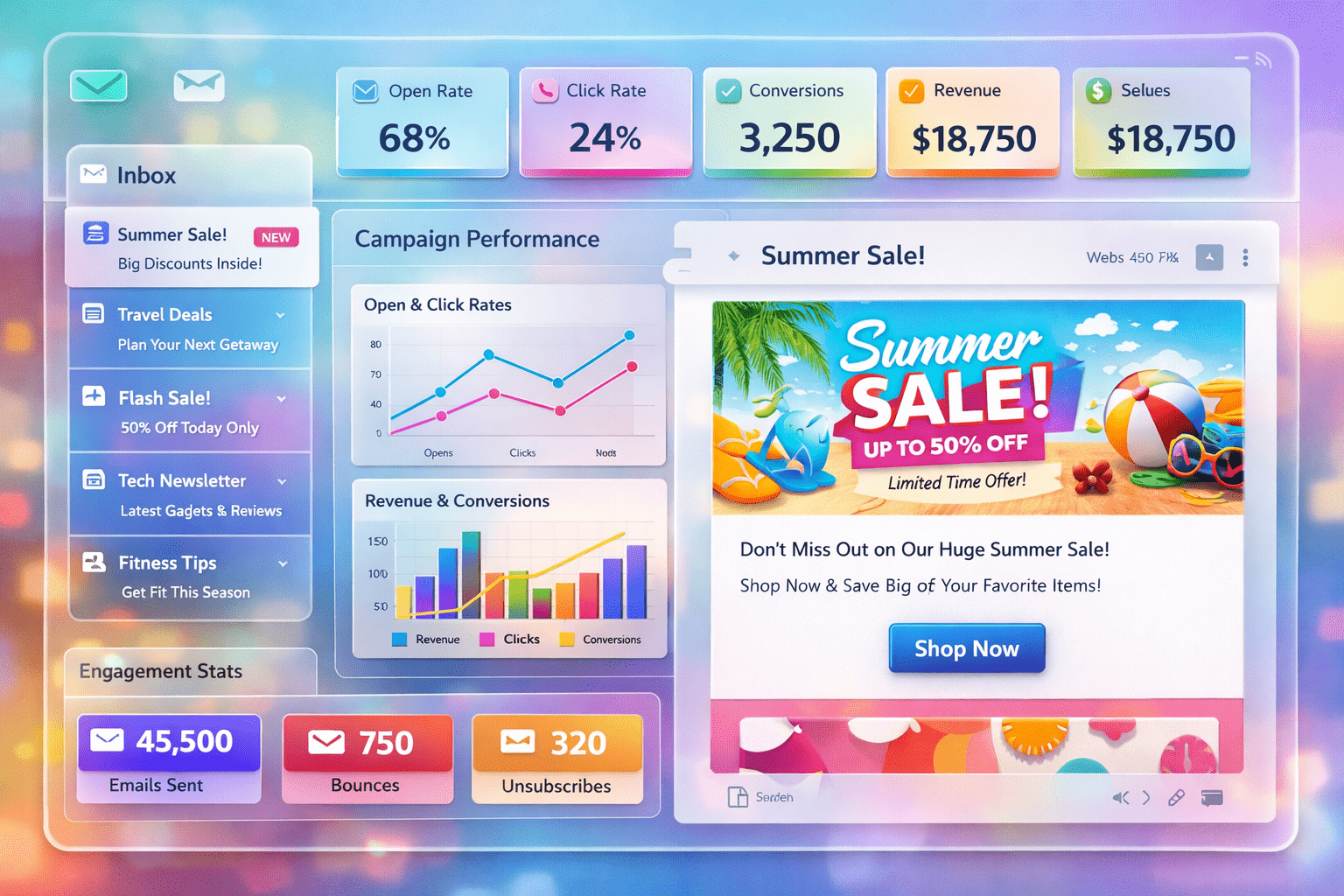
Email marketing is a data-driven discipline. Track key metrics like:
- Open rate
- Click-through rate
- Conversion rate
- Revenue per email
- List growth and churn
These metrics show what’s working and where you can improve. Test elements such as subject lines, send times, content blocks, and incentives to continuously refine performance.
Regular analysis helps you invest more in what drives revenue and cut what doesn’t.
Long-Term Loyalty Through Email
The most profitable ecommerce email strategies are built for the long haul. While promotional blasts still have a place, the real value comes from relevant, automated, and personalized interactions that guide subscribers through their lifecycle.
A strong email program:
- Welcomes and converts new subscribers
- Encourages ongoing engagement
- Rewards loyal customers
- Reactivates disengaged segments
By treating your email list as a living audience rather than a static asset, you create a repeatable engine that supports customer acquisition and retention.
Final Thoughts
Email marketing remains one of the highest-ROI channels ecommerce brands can use to grow. With thoughtful list building, strategic segmentation, automation, and personalized messages, you can turn subscribers into repeat buyers and create sustained revenue growth for your store.
When email reaches the right person at the right time with a message that feels relevant, it becomes far more than communication — it becomes commerce.
