

For ecommerce brands aiming to grow sustainably and efficiently, data-driven marketing isn’t optional — it’s essential. Data-driven marketing uses measurable customer behavior and performance insights to shape strategy, remove guesswork, and guide every decision you make about how, where, and why you spend your time and budget. When you understand what your customers do, what they ignore, and what motivates them to buy, you can optimize your entire marketing engine.
This article walks you through the mindset, tools, and methods of data-driven marketing so you can unlock actionable insights and fuel consistent growth.
What “Data-Driven Marketing” Really Means
Data-driven marketing is the practice of collecting customer and campaign data, analyzing it to identify trends and opportunities, and using those insights to improve performance across channels. It replaces subjective decisions and guesswork with evidence-backed strategy.
When your marketing is truly data-driven, every campaign, message, and investment is grounded in real performance — not just intuition. This leads to better resource allocation, improved personalization, and higher conversion efficiency.
Build a Strong Data Foundation
The first step in data-driven marketing is collecting the right data. Raw numbers are valuable only if they are accurate, relevant, and aligned with your business goals.
First-Party Behavioral Data
This refers to customer interactions on your ecommerce site — what pages they visit, how long they stay, what products they view or add to cart, and how they navigate your site. This type of data is the most reliable because it reflects direct interactions with your brand.
Engagement and Campaign Data
Track how audiences interact with your marketing campaigns — from email opens and click-throughs to ad engagement and social interactions. These insights reveal which messages and channels resonate most with your audience.
Purchase and Customer Value Data
Monitor purchase frequency, average order value, time between purchases, and customer lifetime value. This data helps you understand who your best customers are, how often they buy, and which behaviors correlate with loyalty and repeat purchases.
Collecting clean, consistent data allows you to move confidently into analysis and decision-making.
Turn Data Into Strategic Decisions
Once you’re consistently collecting data, the next step is identifying and measuring the most meaningful insights.
Set Clear Marketing Objectives
Before diving into analytics, define what you want to achieve:
- Increase sales
- Lower customer acquisition costs
- Improve email campaign performance
- Boost repeat purchases
Knowing your objectives helps you choose the right data to monitor and interpret.
Track the Right KPIs
Not all metrics are equally valuable. Focus your attention on performance indicators that directly reflect business outcomes such as:
- Conversion rate
- Average order value
- Customer acquisition cost
- Retention and repeat purchase rates
- Campaign engagement performance
These metrics allow you to see not just activity, but impact.
Build Dashboards and Regular Reports
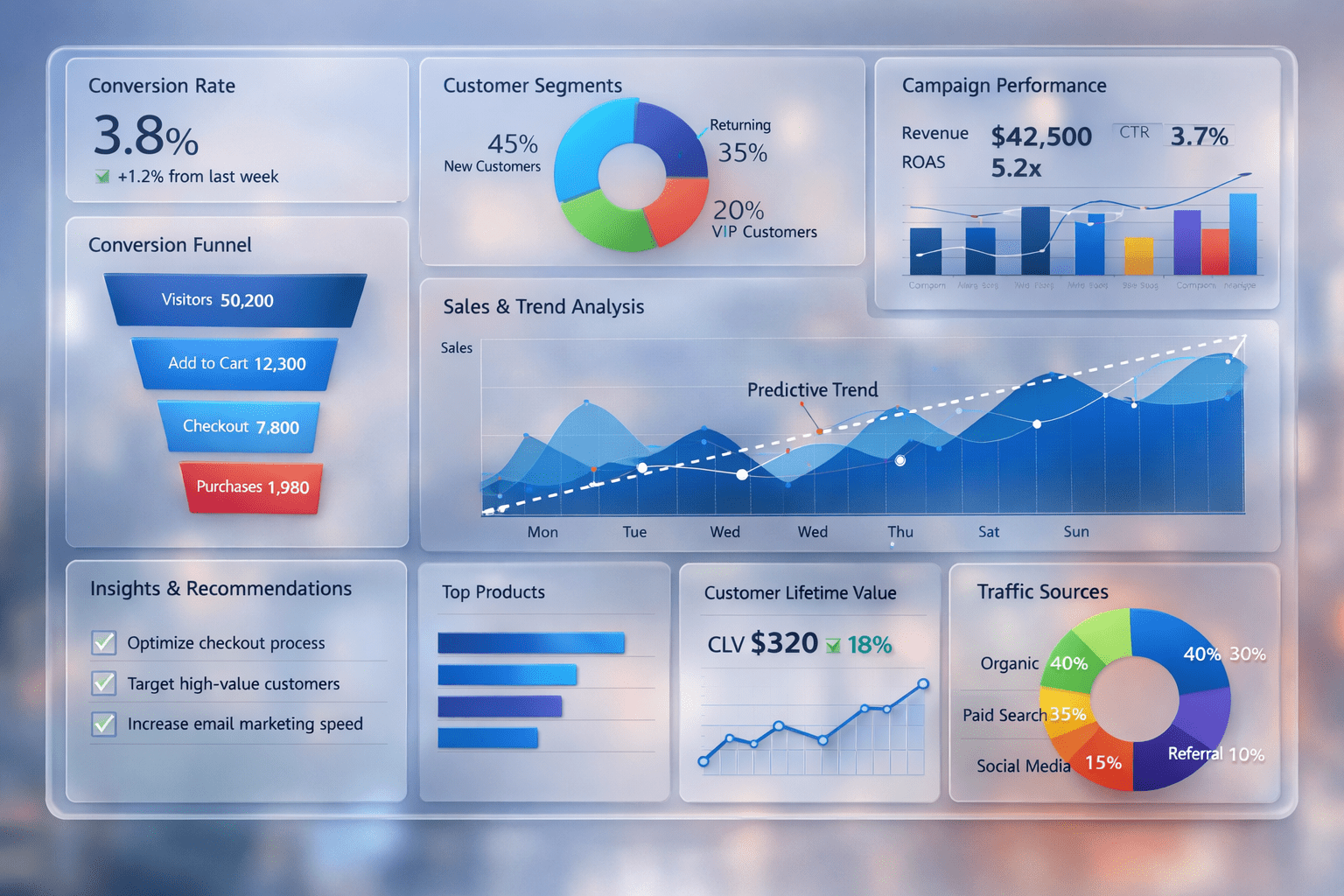
Organize key metrics into dashboards that you or your team review on a weekly or monthly basis. Dashboards make it easy to spot trends, identify problems early, and measure progress toward goals. Regular reporting encourages data fluency across your business and ensures insights lead to action.
Apply Insights to Improve Performance
Analytics are most powerful when they lead to real changes in strategy and execution.
Audience Segmentation and Personalization
Data lets you divide your audience into meaningful segments based on behavior and purchase history. For example:
- First-time buyers
- High-value repeat customers
- Cart abandoners
- Inactive subscribers
Once segmented, you can tailor your messaging and offers so they are more relevant. Segmented campaigns consistently outperform generic ones because they speak directly to the interests and needs of each group.
Personalization doesn’t stop at messaging. You can also use data to tailor product recommendations, landing page experiences, and cross-sell or upsell offers.
Optimize Campaign Performance
Analytics reveal what’s working and what isn’t. You can test different elements like subject lines, creative variations, targeting parameters, and promotional messages to see which combinations drive the best results. Over time, this improves both efficiency and ROI.
Identify Patterns and Predict Behavior
Advanced analytics can reveal patterns in customer behavior that help you anticipate future actions. For example, predictive insights may show which customers are likely to churn or which segments respond best to certain offers. While it takes more sophisticated tools and analysis, the payoff is proactive marketing — reaching the right people before they disengage or miss an opportunity.
Avoid Common Analytics Mistakes
Even with the best intentions, marketers can misinterpret or misuse data. Here are some common pitfalls to avoid:
Focusing on Vanity Metrics Instead of Outcomes
Metrics like social media likes or raw page views can look good on paper but don’t always translate into revenue. Prioritize metrics that tie directly to business outcomes.
Ignoring Data Quality and Consistency
If your data is inaccurate or inconsistent across sources, your insights will be flawed. Regularly audit your tracking and ensure tools are capturing data correctly.
Collecting Data Without Acting on It
The real value of analytics comes from applying what you learn. Collecting data without making strategic adjustments based on insights is a missed opportunity.
Build a Data-Driven Marketing Culture
For analytics to truly fuel growth, your organization needs to value and act on data. This means:
- Encouraging curiosity and experimentation — teams should feel empowered to explore data and test hypotheses.
- Aligning metrics with business goals — everyone should understand which KPIs matter and why.
- Sharing insights across teams — insights from one area (like customer behavior) can inform others (like product strategy or creative messaging).
- Iterating based on results — use performance data to refine and improve your campaigns over time.
When data drives your decision-making, your marketing becomes more predictable, measurable, and scalable.
Data-Driven Marketing Is a Competitive Advantage
In a crowded ecommerce landscape, brands that optimize based on real customer behavior and measurable results gain a meaningful edge. They waste less budget, improve customer experience, and deliver more consistent revenue growth. Rather than guessing what will resonate, they know what works because their insights are grounded in actual performance.
Data-driven marketing isn’t just about numbers — it’s about understanding your audience at a deeper level and using that understanding to build smarter, more effective campaigns that fuel sustainable growth.
